09 April 2007

Nietzsche Lecture


The Trinity philosophy department is honored to be hosting Prof. Bruce Ellis Benson, the chairman of the Wheaton College philosophy department, for a public lecture on Monday, 16 April at 3:30 in CL 203.

His lecture title is: "Pious Nietzsche: From Christianity to Dionysian Pietism." You won't want to miss his fascinating talk. Dr. Benson is a Nietzsche scholar, whose forthcoming book seeks to engage Nietzsche critically and constructively from a Christian philosophical standpoint.

From his web page at Wheaton College:
Dr. Benson's research interests include the following areas. The first is the "theological turn" in phenomenology and work at the intersection of continental philosophy and theology. Not only does he write in this area, but also he is co-founder and co-secretary of the Society for Continental Philosophy and Theology (1997) and a member of the steering committee of the Theology and Continental Philosophy Group of the American Academy of Religion. Graven Ideologies and The Phenomenology of Prayer are examples of work in this area. The second is the topic of hermeneutics and interpretation theory, with Hermeneutics at the Crossroads being an example of that work. A third area is aesthetics in general and philosophy of music in particular. The Improvisation of Musical Dialogue is an example of that interest. Finally, Dr. Benson's work has also turned in an increasingly political direction. The forthcoming Evangelicals and Empire--an analysis of American evangelicalism from the perspective of the empire theory of Michael Hardt and Antonio Negri-is part of that project.
Again, the lecture will be held at 3:30 in CL 203. For more information, please see or contact Prof. Stephen Lake.

NEW in Fall 2007! Symbo Limbo (PHIL 299)

You may have noticed a change in the schedule from PHIL 206 Logic to PHIL 299 Symbolic Logic—or Symbo Limbo, as I and other logic aficionados affectionately call it.

Here are answers to some Frequently Asked Questions (FAQs) about this change:

Question: Uh, why did you do it?

Answer: Because some students wanted it. And, really, it is about time it be taught again. Symbo limbo is an important type of logic and our current PHIL 206 does not cover much of it. In fact, it ends with a brief dabble in symbo but it’s hardly enough to count as a full-fledged symbo limbo.

Question: What exactly is the difference between the 206 Logic and Symbo Limbo?

Answer: 206 is more of a 'critical thinking' course, covering informal logic, fallacies and traditional Aristotlean logic (e.g., Venn diagrams, square of opposition, categorical propositions and inferences). We conclude with a teensy weensy bit of the more contemporary symbolic logic. Thus, the 299 course will, in effect, pick up where 206 topically left off. Symbo limbo is strictly formal logic with a more mathematical feel. They’re both VERY, VERY FUN!

Question: Is 206 a pre-requisite for Symbo Limbo?

Answer: No.

Question: Is Symbo Limbo harder than 206?

Answer: No. Or at least, not necessarily. If you find formal, analytical reasoning difficult, you may be more challenged by 299 than 206. If you have a ‘mathematical mind,’ you’ll positively LOVE Symbo Limbo. But don’t worry, even someone with NO BACKGROUND in LOGIC can take Symbo Limbo and get a lot out of it. We start out simple and work up from there!

Question: Will 299 count towards the Logic requirement of the philosophy major?

Answer: You bet.

Question: Are there plans to offer Symbo Limbo again?

Answer: Yes. In fact, I expect that we will add it permanently to the course catalog next year (as PHIL 207). It will then be offered every third year—i.e., at least once every 4 years.

Question: Will you offer 206 in 2008-9?

Answer: Yep. It'll be back, don't worry.

Question: Will I be a better person for having taken Symbo Limbo?

Answer: Undoubtedly so. I anticipate you will grow as a person, and not just intellectually in this course. I anticipate beginning class with a brief round of calisthenics—after all, you have to limber up first if you are going to do the limbo—plus a symbo limbo devotional. ; )

Question: What's next? The Logic Lambada?

Answer: Again, if there is a student demand for it, we shall respond. I would caution you against it, though: the lambada is, after all, the forbidden dance.

02 November 2006

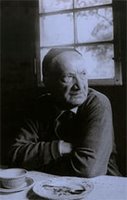
Course Preview: PHIL 295 Major Author: Heidegger

What is the meaning of being?

Astonishingly, the great philosopher Martin Heidegger argued that we have not ever even posed the question of the meaning of being. At least not in any radical way. So he set out to pose this question with all philosophical radicality, and not take its answer for granted any more. And his Sein und Zeit--Being and Time--is his first report back from his investigations. It stands as one of the truly monumental works of 20th century philosophy, and has exerted a contemporary influence wider than almost any other single text.

This spring we have the unique opportunity to offer a Major Author's course on Martin Heidegger, in which Being and Time will be the primary focus. A close reading course, Prof. Aron Reppmann will be your guide on this amazing journey. Heidegger's influence has been decisive upon contemporary Continental philosophy, upon theology and upon so-called postmodernism in the arts and culture in general. Any student interested in these issues will profit from this course.

PHIL 295 will meet Tuesdays and Thursdays at 9:30 AM.

01 November 2006

Course Preview: PHIL 321 Existentialism and Phenomenology

Why is there something, rather than nothing?

What is the meaning of human existence?

After the excesses of modern rationalism and scientism, is there a meaning to be found? Can we recover a sense of the meaning of existence? Can we get back to the bedrock, the things themselves?

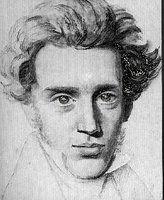
These questions motivated the movements of existentialism and phenomenology, the most profound influential tradition of contemporary Continental philosophy. They influenced so-called post-modern thinking in profound ways as well. The course will survey the writings of existential thinkers such as Kierkegaard (that's him in the picture!) as well as the phenomenological movement of Husserl and Heidegger.

Prof. Pierson teaches this course and has a great personal passion for these issues. His graduate work was in the philosophy of this period. He brings a keen sense of the Christian dimension to philosophical inquiry in this field, especially for the way that the Continental tradition has shaped the Reformational philosophical tradition that helped found Trinity.

Join him Tuesdays and Thursdays at 11AM.

PHIL 102 and 102 (or 108) are prerequisites for this course.

Course Preview: PHIL 201 History of Philosophy I

From Thales to Democritus, from Socrates and Plato to Aristotle, from the Stoics to the neo-Platonists, and from St. Augustine (on the right) to St. Anselm and St. Thomas: PHIL 201 is an encounter with the figures and texts that have shaped our culture. It begins with the ancient Greeks and culminates in the Medieval synthesis of Christian faith and reason. This is an excellent course for anyone with a curiousity about the great ancient worldviews that helped shape Christian thought.
Prof. Aron Reppmann, an expert in the philosophy of Plato, teaches this course. He's passionate about Plato and the Platonic tradition, and will help you explore the riches of our ancient past. For him, as well as the ancients, philosophy is truly a love of wisdom.

Join Prof. Reppmann at 9AM MWF this spring!

(No prior background in philosophy is necessary, though PHIL 101 and 102 (or 108) are recommended.)

NEW in Spring 2007:

Philosophical Theology (PHIL/THEO 311)

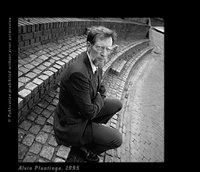
Alvin Plantinga,
Philosophical Theologian Extraordinaire


Ever wonder how evil and the goodness of God are compatible? How God responds to evil? And we should, too?

Ever wonder why we are free if God knows everything in advance, including what you are doing right this very instant? If you could never have chosen otherwise than God knows, are you really free?

Ever wonder about the mysterious nature of God? Of His being three-in-one? Being both human and divine in the incarnation of Jesus Christ?

These questions and more are all on the agenda in Philosophical Theology, a new course this spring taught by Prof. Stephen Lake, Tuesdays and Thursdays at 2 o'clock.

If you have completed PHIL 101 and 102, you are elligible to enroll.

If you are planning on seminary or graduate school in theology or philosophy, this course will be indispensible preparation.

Cross-listed in both Philosophy and Theology, it can count towards major, minor or elective credit in either department.

Any other questions? Please see Prof. Lake, or post your questions here and I will respond!

21 October 2006

Questioners of the World Unite!

Do you have any lingering, unanswered questions from a class, or from a conversation with a friend, that you would like to explore with others in a non-threatening environment?

Then Philosophy Club might just be for you.

Recently, we've been pondering these issues:

Ever wonder what was so enlightening about the Enlightenment? Or what was so disenchanting? Why is the Enlightenment such a big deal for Christian faith? Or is it, really?

Sound like your kind of 'phun'?

Then check out the Philosophy Club!

It is a friendly meeting place for the preternaturally curious.

We meet every Monday at 10 AM in the Curriculum Center of the library.

For more info, just show up or contact Whitney Stafford at her Trinity address or contact any of the philosophy professors.

18 October 2006

Philosophy Film Night!

Wednesday, 25 October

Join the philosophy department for pizza and a movie next Wednesday night, 25 October. Let go of the stress of midterms and watch with us Wim Wenders's existential classic, "Wings of Desire".

There are angels in the streets of Berlin, Germany, listening in on the thoughts and following the lives of people, young and old, as they go through their daily routine. They are there for every tear, every smile, for moments of desperation and moments of exhileration. They eavesdrop on human existence.


But what if an angel could lose his wings and become a human? Could experience love and pain, fear and joy, just like the rest of us? The angel Damiel might just get his wish.

A visually stunning film, "Wings of Desire" is a thought-provoking meditation on what it means to be human. We will watch the film and afterwards explore its meaning and message.

It all begins at Prof. George Pierson's home at 6:30 PM, Wednesday, 25 October. We will arrange transportation. Food and drinks are compliments of the Philosophy Department!

Anyone with an interest in philosophy or this film is welcome to join us. Yes, we do mean ANYONE.

Please contact Prof. Stephen Lake (x4518) or e-mail him at his Trinity address to let us know if you intend to come. Details about transportation will be available here and on Trollview next week.

29 August 2006

Opinions?

What do you think about Trollosophy?

Go ahead and post your views. Anonymous is fine. And don't worry about the comment approval process. Any and all comments are approved automatically, so long as they are in good taste. Or else. . .

NEW This Fall! PHIL 310 Reformational Philosophy

Ever wanted to know more about why Christian worldview is such a big deal at Trinity?

Would you like to be able to impress your friends and family by being able to pronounce "Dooyeweerd" easily?

Would you be interested in getting to know one of the most original Christian philosophical traditions so far--and better understand its influence at Trinity?

If you answered "yes" to any of the above, it's not too late to sign up for PHL 310, Reformational Philosophy. This course will introduce you to the work of Abraham Kuyper, the great Dutch Christian scholar and statesman, and the philosophical movement known as neo-Calvinism. This worldview and philosophy was most fully articulated by the late Herman Dooyeweerd and continues to generate rich insights in many areas from political thought to aesthetics to theology to epistemology and many other areas.

This is a seminar course and has a small enrollment so students can interact with the texts, one another and Dr. Pierson in a casual and relaxed atmosphere.