Last year we began offering a senior seminar (PHIL 401 & 402), a year-long experience integrated into the department's normal colloquium. Senior students are invited (now, but by 2009, required) to join the full-time members of the department as we explore a topic together. Each year the topic changes, but it should always be something of a 'capstone experience' to the major, helping students reflect back on their Trinity experience with a comprehensive vision and challenge for the future. The faculty participate, too, as we hope it have the atmosphere of a graduate-level seminar (though probably less formal).
I, Professor Lake, am coordinating the seminar this year and our topic will be Philosophical Autobiography. The vision is to explore the writings of philosophers about their own lives as philosophers. Most of our readings will come from contemporary philosophers in three helpful volumes of personal reflections by leading voices in the field:
There will be a couple of other reserve readings as well.
The literary history of philosophical autobiography is rich. I would argue (though some might dissent) that both Augustine (in his Confessions) and Boethius (in his Consolation of Philosophy) are doing the kind of work that philosophical autobiography does, or ought to do. I think they are more than that, but they are not less than autobiography as well. For them, I think it is important to note, the autobiographical aspect of their writing was not the aim of the text but it was more of a mode in which they confessed a philosophical and theological outlook.
To begin the conversation, we faculty are going to post some of our own reflections. I've already written one and will post it next, here on Trollosophy.
The literary history of philosophical autobiography is rich. I would argue (though some might dissent) that both Augustine (in his Confessions) and Boethius (in his Consolation of Philosophy) are doing the kind of work that philosophical autobiography does, or ought to do. I think they are more than that, but they are not less than autobiography as well. For them, I think it is important to note, the autobiographical aspect of their writing was not the aim of the text but it was more of a mode in which they confessed a philosophical and theological outlook.
Today, we do not have as rich a literature, perhaps, as these luminaries. And to be sure, the authors we read usually will have less of a philosophical task in mind than either Augustine or Boethius did. We will take our cue, I suspect, more from the contemporary writers than from the historical ones. Students and faculty alike will be asked to reflect on their own lives in philosophy, seeking to understand the work of God in their lives through philosophy.
To begin the conversation, we faculty are going to post some of our own reflections. I've already written one and will post it next, here on Trollosophy.


 His lecture title is: "Pious Nietzsche: From Christianity to Dionysian Pietism." You won't want to miss his fascinating talk. Dr. Benson is a Nietzsche scholar, whose forthcoming book seeks to engage Nietzsche critically and constructively from a Christian philosophical standpoint.
 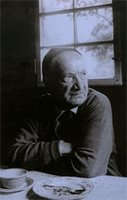 What is the meaning of being?
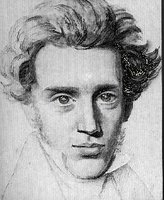 Why is there something, rather than nothing?
 From Thales to Democritus, from Socrates and Plato to Aristotle, from the Stoics to the neo-Platonists, and from St. Augustine (on the right) to St. Anselm and St. Thomas: PHIL 201 is an encounter with the figures and texts that have shaped our culture. It begins with the ancient Greeks and culminates in the Medieval synthesis of Christian faith and reason. This is an excellent course for anyone with a curiousity about the great ancient worldviews that helped shape Christian thought.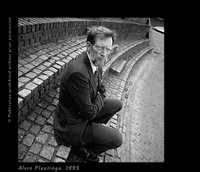
 Join the philosophy department for pizza and a movie next Wednesday night, 25 October. Let go of the stress of midterms and watch with us Wim Wenders's existential classic,
  But what if an angel could lose his wings and become a human? Could experience love and pain, fear and joy, just like the rest of us? The angel Damiel might just get his wish.